

Department of Chemical Engineering Seminar 2026-Dr. Vasiliki-Michaela Patila (Department of Biological Applications and Technologies, School of Life Sciences, University of Ioannina)
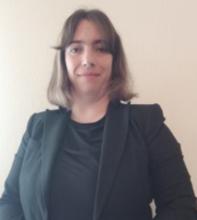
Seminar Subject: Development of nanobiocatalytic systems for bio-applications
Event Category: Departments Seminar Program (Webinars)
Speaker Name: Dr. Vasiliki-Michaela Patila
Speakers Affiliation: Department of Biological Applications and Technologies, School of Life Sciences, University of Ioannina
Seminar Room: "A. C. Payatakes" Library
Event Date:
Fri, Jan 23 2026,
Time:
15:00 - 15:45 (Athens, Greece Time)
Webinar presentation (webConference link available) with physical presence of the speaker at the seminar room
Live webConference Link: Meeting ID: 936 8390 9075, Security Passcode: 033700
Abstract
Nanobiotechnology, the scientific field that combines the knowledge and expertise of nanotechnology and biotechnology, offers significant benefits by exploiting the unique properties of materials at the nanoscale, revolutionizing medicine, environmental science, and industry. The presentation focuses on the development of nanobiocatalytic systems through the immobilization of biological molecules, such as enzymes, drugs, and antibodies, on nanostructures. The special characteristics of materials at the nanoscale are discussed for their use as carriers for the interconnection of molecules of high interest. Particular emphasis is given to "green", environmentally friendly, approaches to the synthesis of nanostructures that ensure their use in bio-applications, where biocompatibility, low toxicity, antimicrobial, and antioxidant activity of nanostructures are critical for their application. Furthermore, the advantages of immobilizing biological molecules on nanostructures are pointed out, offering a promising strategy for enhancing their action in various fields. Through various immobilization strategies, including covalent bonding, physical adsorption, and encapsulation, the development of biomolecule-nanostructure interactions is facilitated, while the nanoscale environment promotes the favorable dynamic configuration of the final systems and devices. Simultaneously, probing the structure-function relationships in nanobiocatalytic systems—by examining how nanostructure morphology and physicochemical properties influence the structure of biological molecules—proves essential for selecting the optimal system for targeted applications. Finally, the potential of these systems for diverse biotechnological and biomedical applications will be highlighted.
Speakers Short CV
I received my Bachelor's degree with an integrated Master's degree in 2010 from the Department of Biological Applications and Technologies (BAT) at the University of Ioannina, Greece. I continued my studies as a PhD candidate at the Laboratory of Biotechnology from the same department, and I received my Diploma in 2016, under the supervision of Prof. Haralambos Stamatis. In 2023, I received my M.Sc. degree from the Department of Materials Science and Engineering at the University of Ioannina, Greece. During my PhD studies, I was qualified with a scholarship from the University of Ioannina Research Committee. My research career continued as a post-doctoral fellow at the Laboratory of Biotechnology, BAT, University of Ioannina. I was awarded a two-year post-doctoral fellowship from the State Scholarships Foundation of Greece (IKY) for the development of novel nanobiocatalytic systems to produce high-added value products and the biodegradation of environmental pollutants. Currently, I work as a Researcher at the Laboratory of Biotechnology, of the BAT, at the University of Ioannina (https://biotech.bat.uoi.gr/). I have worked in 9 funded European and National programs and have been a reviewer in >10 international journals. I am the author of 32 publications (4 as the co-corresponding author) in peer-reviewed journals (IF/article=5.0, >900 cross-references, h-index 17, ORCID ID: 0000-0003-1051-9001), and 5 chapters in international books. At the same time, I have participated in Greek and International conferences, delivering 6 oral presentations and 58 posters. I am also a Guest Editor for a Special Issue in the Nanomaterials journal (https://www.mdpi.com/journal/nanomaterials/special_issues/6KP1AP253H). In addition, I have carried out independent teaching work in the BΑT department during the years 2016-2022.My research focuses on pioneering green, sustainable processes for producing high-value nanomaterials and bioproducts, often utilizing industrial and agricultural wastes. I specialize in engineering nanobiocatalysts via immobilization of biomolecules on nanosupports, advanced structural characterization of these nanosystems, and the design of bio-application platforms—including biosensors, drug delivery systems, and microfluidic bioprocesses.